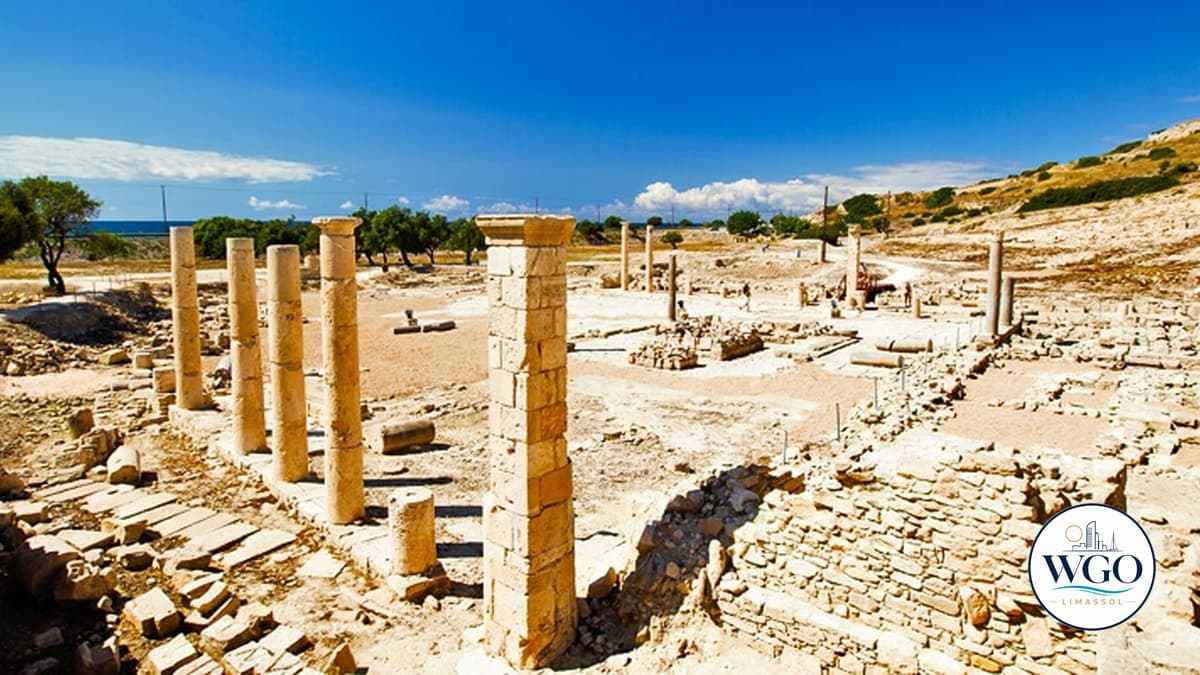
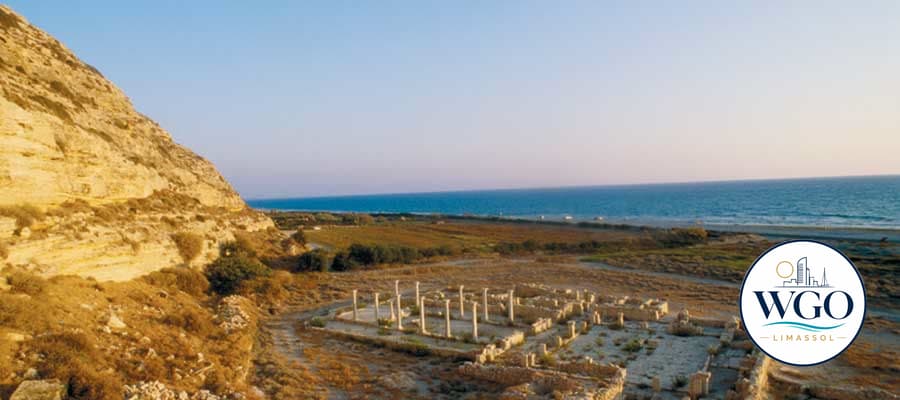
Amathous Archaeological Site opens daily from 08:30 to 17:00 during its published winter season, with base admission of €2.50. It gives a November outing east of central Limassol a clear destination: the remains of an ancient city, including its agora and public baths.
A short history of Amathous
Amathous was one of the ancient city-kingdoms of Cyprus, founded at the beginning of the first millennium BC. Ancient writers described its people as Eteocypriots, “true Cypriots”, and linked the city to the legendary king Cinyras, who in one tradition named it after his mother, Amathous. Inscriptions in their own language, written in the Cypriot syllabary, have been found here and remain undeciphered. Religion shaped the hilltop. The sanctuary of Aphrodite on the acropolis received votive offerings from the mid-8th century BC, and temples to Adonis and Hercules are also believed to have stood there. One myth even says Theseus left the pregnant Ariadne at Amathous. In 499/498 BC, when Onesilos of Salamis led the Cypriot revolt against Persia, Amathous refused to join. He besieged the city but later fell in battle, and according to Herodotus the Amathusians hung his head above their gates. The agora and baths you see today date from the Hellenistic and Roman periods. In Late Antiquity the town was the seat of a bishop, which explains its early Christian basilicas, but it was abandoned at the end of the 7th century AD. Much of its stone was later carried off for building, some reportedly to Port Said during the Suez Canal works. One of two giant stone vases from the acropolis went to the Louvre in 1865; a replica stands in its place.
Plan the visit
Location: Amathous, 11 km east of Limassol centre Winter season: 16 September–15 April Hours: Daily, 08:30–17:00 Admission: €2.50 Access: Partially wheelchair accessible; accessible toilets Time needed: About 1–2 hours; up to 3 for a thorough visit By car: About 15 minutes from Limassol centre Find Amathous on a map. These details were checked on 4 November 2026 against the Deputy Ministry of Tourism's official page.
A useful way to look around
Start with the agora in the lower town. Looking at the relationship between the court and the surrounding porticos can make the site easier to read than inspecting each piece of stone in isolation. Think about how people might have moved through the space and where the buildings met the open court. The official description also identifies public baths and the sanctuary of Aphrodite on the acropolis. Pick the features that interest you, rather than treating the visit as a checklist to finish. Most guides suggest one to two hours in total: the walk up to the acropolis takes about 15 minutes, and adding the walls and harbour area can stretch a thorough visit to around three hours. This suggested order is editorial advice, not an official marked walking route or a promise that every part is accessible. For a wheelchair user, the word “partially” matters. It should shape the plan rather than be read as full access to the whole site. Comfortable shoes, water and a light layer are sensible preparations for time outdoors. After rain, ground conditions should determine the pace.
Fitting it into a November day
The map link supplies a destination for a car or taxi. No bus number is supplied here without verification of the current service. Leaving the visit as the day's main stop gives you room to shorten it if weather or tiredness changes the plan. The seasonal closing time is the important constraint. The summer closing time of 19:30 does not apply in November, so a late departure from town leaves less time to explore.
Before you go
Is it open on Sunday? The published schedule is daily. The tourism portal says hours and fees may change. Is the whole site wheelchair accessible? The official description specifies partial access. Is this an indoor visit? It is an archaeological outing outdoors, so dress for the conditions on the day. For another ancient-site visit, see the Kourion practical guide. Find more ideas in things to do, or browse family activities.